
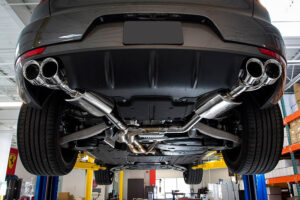
For high-performance vehicle enthusiasts, the exhaust system is much more than a pipe that carries away engine emissions. It’s a crucial component that affects engine noise, throttle responsiveness, power output, and the overall driving experience. One of the most common upgrades for turbocharged vehicles, a turbo exhaust system can improve both performance and sound. Is it really improving general engine performance, or is it just a matter of better acoustics? How the system is upgraded, how the car is built, and how it is integrated will determine the outcome. A properly designed upgrade may revolutionise the driving experience for owners of high-performance vehicles such as the Porsche 992 Turbo Exhaust. This tutorial details ways a turbo exhaust may increase your car’s performance and enhance your engine.
Improved Flow with Decreased Backpressure
Reduced backpressure is the main performance benefit of an updated turbo exhaust. Due to considerations for noise restrictions, emissions compliance, and cost, factory exhaust systems are made with catalytic converters, baffled mufflers, and limited piping that obstruct exhaust gas flow. A performance turbo exhaust lets exhaust gases leave the engine faster with wider-diameter pipes and more free-flowing parts. This improves throttle response and acceleration by reducing the turbocharger’s resistance, allowing it to spool faster and build boost more effectively.
Increased Turbo Spool and Less Lag
To compress intake air, turbochargers rely on exhaust gas flow to turn the turbine. Turbo lag is the delay between pressing the accelerator and feeling the power caused by a restrictive exhaust system, which prevents the turbine from spinning as freely. This restriction is decreased by a high-flow turbo exhaust, which enables the turbo to spin up faster. The result is a more engaging driving experience, quicker power delivery, and improved throttle responsiveness. Most often, turbocharged cars will find this reduced spool time the most apparent and rewarding advantage of an exhaust upgrade.
Greater Torque and Horsepower
A performance exhaust may release more horsepower and torque that were previously limited by the factory system by improving flow and lowering backpressure. For a properly engineered system, common enhancements range from 5% to 15%, while increases vary based on the car and exhaust design. Even moderate gains are substantial on a high-performance vehicle like the Porsche 992 Turbo, and a high-quality exhaust can significantly improve both mid-range torque and peak power. Drivers often feel these benefits most during overtaking and acceleration.
Weight loss
Large, heavy mufflers and thick steel tubing are frequently used in factory exhaust systems. Performance exhausts are usually made of lighter metals like stainless steel or titanium, which lowers the car’s total weight. This weight saving helps accelerate, brake, and handle better. For performance-oriented drivers, shedding weight is one of the best strategies to improve a vehicle’s overall dynamics, and upgrading the exhaust system is a great way to do so without sacrificing comfort or usefulness.
Better engine sound
Many aficionados place a lot of importance on the sound of a turbo exhaust, even though it isn’t technically a performance statistic. A properly designed system produces a louder, more aggressive note that shows the engine’s personality and strengthens the driver-to-machine emotional bond. The exhaust note of turbocharged cars is frequently complemented by turbo spool and wastegate sounds, which are muted by the factory system. An exhaust’s improved sound is one of its most fulfilling features, making every trip more interesting.
Enhanced Thermal Performance
Performance exhaust systems are often designed to manage heat more effectively than factory systems. By using materials with better thermal properties and routing that reduces heat buildup, they help keep temperatures lower in the engine compartment. By avoiding heat soak, which can lower power during sustained driving, this can increase dependability and performance. Furthermore, lower under-bonnet temperatures protect delicate parts like wires, hoses, and sensors, improving the engine’s durability.
Possibility of Improved Fuel Efficiency
Reducing back pressure can boost engine efficiency, even though performance exhausts aren’t mainly sold for their fuel efficiency. Under consistent driving conditions, the engine may see small gains in fuel efficiency because it breathes more easily and doesn’t have to work as hard to expel exhaust gases. Many drivers, however, may see reduced fuel efficiency after an exhaust upgrade because the improved sound and performance encourage a more enthusiastic driving style.
Conclusion
By lowering backpressure, accelerating turbo spool, raising power and torque, and reducing weight, a turbo exhaust can significantly boost overall engine performance. In addition, it elevates the driving experience with enhanced sound and aesthetics. However, the degree of the gains is determined by the system’s quality and its suitability for the car. With a high-end system like the Porsche Turbo Exhaust, the driving experience of high-performance vehicles may be enhanced by providing measurable performance gains and a more engaging soundtrack. One of the most rewarding modifications available to enthusiasts trying to maximise their vehicle’s performance is a turbo exhaust.
Visit bushwood for more informative blogs.