
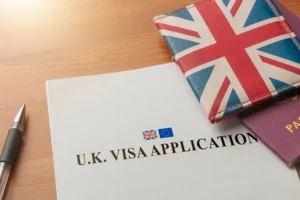
Permanent residence in the UK is commonly referred to as Indefinite Leave to Remain (ILR) or settlement. It allows an eligible person to live, work and study in the UK without a time limit, subject to the conditions attached to settled status. There is no single route for everyone, as eligibility depends on your visa, length of residence and personal circumstances. Understanding the correct route, residence requirements and application process is important before submitting an application. Applicants should check the current Home Office requirements carefully because the rules can vary between immigration categories.
Check Which Settlement Route Applies
The first step is identifying the immigration route that may lead to permanent residence. People working in the UK may qualify through routes such as Skilled Worker, Global Talent or Innovator Founder, although the qualifying period can differ. Family members may qualify through family routes, while people who have lived legally in the UK for 10 continuous years may be eligible through the long-residence route.
Other routes are available for certain groups, including people with UK Ancestry visas, refugees and individuals with humanitarian protection. EU, EEA and Swiss citizens may have different options under the EU Settlement Scheme depending on their circumstances and when they began living in the UK. A successful UK Settlement Visa Application can provide eligible applicants with the right to live and work in the UK without a time limit.
Meet the Residence Requirement
The required period of residence depends on the immigration route. For example, many work and family routes require five years before settlement, while the long-residence route generally requires 10 years of lawful continuous residence. Some routes can have shorter qualifying periods.
You should carefully calculate your time spent outside the UK because excessive absences can affect continuous residence. Under the long-residence route, current rules generally allow up to 180 days outside the UK in any 12-month period, although different rules can apply to earlier periods of absence.
Pass the English Language and Life in the UK Requirements
Many applicants between the relevant ages must demonstrate their knowledge of English and pass the Life in the UK Test. The precise requirements depend on the settlement route and individual circumstances. For example, applicants under the long-residence route who are aged 18 to 65 generally need to meet both requirements.
Some applicants may be exempt, so it is important to check the requirements that apply specifically to your immigration category rather than assuming that every applicant has identical conditions.
Prepare Your Supporting Documents
Before completing the application, gather evidence demonstrating that you satisfy the requirements. Depending on your route, this may include your passport, immigration documents, evidence of residence, employment or income information and documents relating to family circumstances.
The exact evidence varies according to the settlement category. Carefully following the document requirements can help ensure that relevant information is provided with the application.
Complete the Online Application
ILR applications are generally submitted online using the relevant UK application service. You must normally be in the UK when applying. The appropriate form depends on your immigration route, so applicants should select the application corresponding to their circumstances.
You should provide accurate information throughout the form and check your answers before submitting it. If your circumstances are complicated, obtaining regulated immigration advice may help you understand which requirements apply.
Provide Biometrics
After submitting the application, you will normally need to provide biometric information, including fingerprints and a photograph. Supporting documents can generally be uploaded through the application process or, where available, scanned during a UK Visa and Citizenship Application Services appointment.
Applicants should also follow any instructions received after submitting the application. Missing an appointment or failing to provide requested evidence could affect the processing of the application.
Understand the Fees and Processing Time
The current UK guidance lists the ILR application fee as £3,226 per applicant. Standard applications generally receive a decision within six months, although processing can take longer where an application is complex or additional checks are necessary. Some applicants may be able to use a faster service for an additional fee.
Applicants should avoid making travel plans outside the UK, Ireland, the Channel Islands or the Isle of Man while an ILR application is pending, because travelling outside the permitted area can result in the application being withdrawn.
Conclusion
Applying for permanent residence in the UK involves identifying the correct settlement route, satisfying the required residence period, meeting applicable English and Life in the UK requirements, preparing supporting evidence and completing the appropriate online application. Because requirements vary according to immigration status, applicants should check the latest GOV.UK guidance before applying. Successful ILR provides settlement in the UK and can also provide a route towards British citizenship where the additional citizenship requirements are met.
Visit bushwood for more informative blogs.